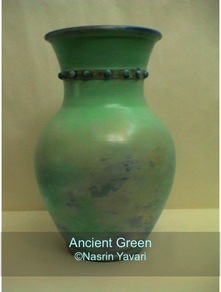
 Handmade clayware artwork has always been popular in Iran. Clayware, is produced in almost all parts of the country and traditionally has been used as household ware in rural regions. The oldest clay pottery found in archeological excavations at Tepe Sialk – Kashan in central part of Iran, belongs to 4000 BC. Ancient style craftsmanship can still be found in remote regions today, but the art of pottery has dramatically evolved with time.
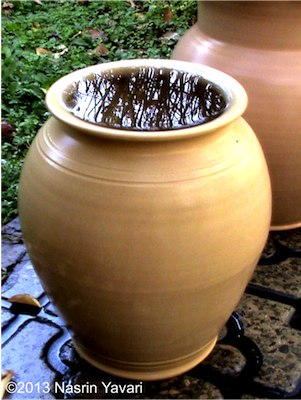
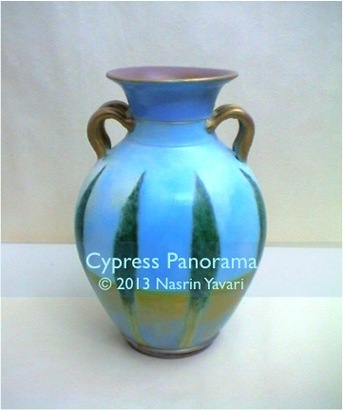
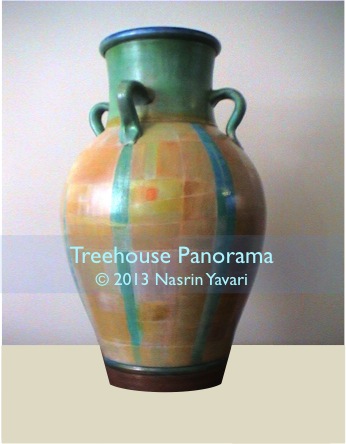
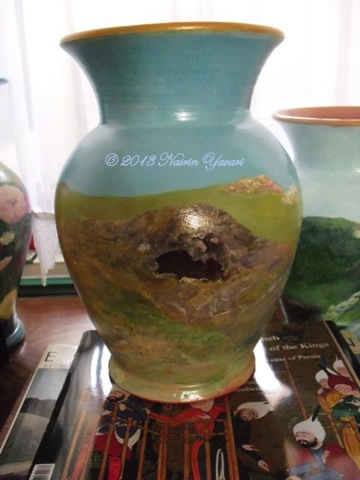
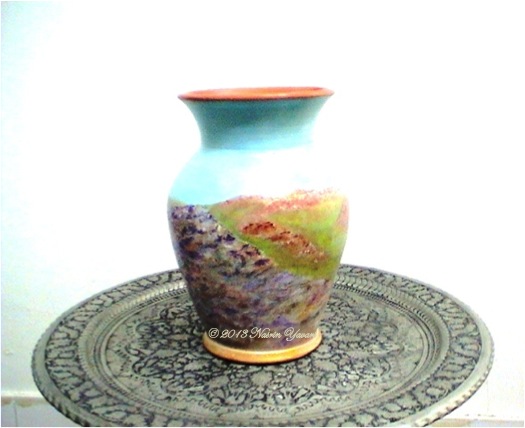
Large beautiful clay wares ( ‘Khomreh’), are used in my ‘Ancient Design project’ uploaded to the Homepage. The Elizabeth Gamble Garden, is one of the historical gardens of the city of Palo Alto. This property has become a non-profit community horticultural foundation. The garden is full of freshness throughout the year with its demonstration gardens which are also used as part of an educational program with local community. The 2.5-acre estate features an Edwardian house and also includes a carriage house, teahouse, tool house, greenhouse, and a gazebo. The garden is open to the public at no charge during daylight hours. Read more: http://www.gamblegarden.org/ http://www.destinationpaloalto.com/pages/d/gamble-garden-center?visitor_info_id=35 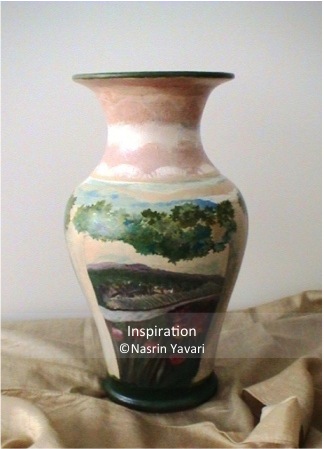 The painting is related to personal image of the magnificent Filoli Gardens, a property of the National Trust for Historic Preservation located at twenty five miles south of San Francisco.
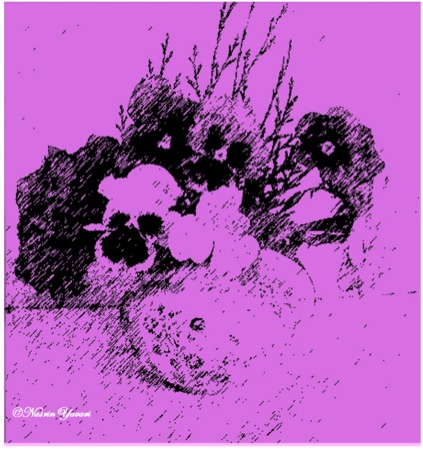 For this small white porcelain vase,
a gift from my beloved mother I pick each time from the garden a bunch of tiny Alyssums, early shoots of Cypress blue and purple Petunia flowers… or just a few leaves of Laurel Pansy of different colors… Zinnia, Marigold, Phlox Geranium, Salvia, Lavender… Roses with a tinge of color late in November Nasrin Yavari  Flowers of many plants are being used since antiquity in traditional cooking, to bring flavor, taste and color into the food preparations. They include vegetable flowers, herbal flowers, fruit flowers and ornamental flowers known for their culinary or medicinal properties. Today eating fresh flowers are becoming popular much as a garnish but also as an integral part of a dish. Squash flowers can be fried or stuffed, other edible flowers like Rose and Pansy are candied; many more are served frozen in ice cubes; made into jellies and jams; used in teas and other beverages; added to cheese spreads, herbal butters; and among ingredients for baking, syrup, flower-scented sugars and new salad dressings. Nonetheless some flowers are toxic, others may be edible only after appropriate preparations. CAUTION: • Remember that not every flower is edible. • Never harvest flowers growing by the roadside. • Do not eat flowers from florists, nurseries, or garden centers, they might contain pesticides. • Identify the flower exactly and eat only edible flowers and edible parts of those flowers. • Flowers served with food at a restaurant might not be edible. • Never use non-edible flowers for garnish on plates or for decoration. • Prepare correctly your fresh edible flowers. How to prepare flowers: 1- Shake well each flower to dislodge insects hidden in the petal folds. 2- Separate the flower petals from the rest of the flower and keep the edible part just prior to use. 2- Wash the flowers by putting them in a strainer placed in a large bowl of water. 3- Drain and allow to dry on absorbent paper. 4- Do not expose to direct sunlight. http://whatscookingamerica.net/EdibleFlowers/EdibleFlowersMain.htm http://www.ces.ncsu.edu/hil/hil-8513.html http://www.culinaryblossoms.com/m_1.asp http://www.treehugger.com/green-food/fresh-flowers-in-food-taste-blooming-delicious.html 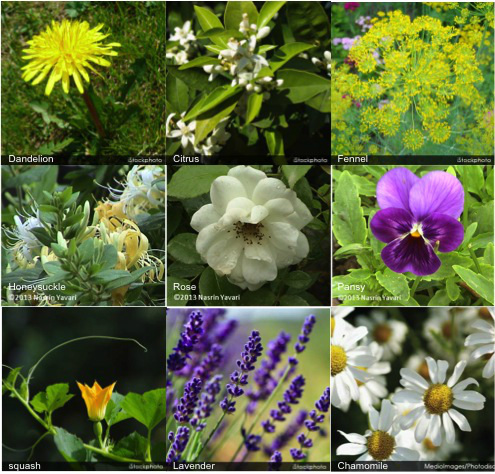 Common edible flowers
•Artichoke (Cynara scolymus, flower bud) Broccoli and Cauliflower (Brassica oleracea, flower buds) •Caper (Capparis spinosa, flower buds) Chamomile (Chamaemelum noblis, flowers for tea in moderation) •Chives (Allium tuberosum, lowers or buds) •Chrysanthemum* (Chrysanthemum coronarium, petals) •Citrus blossoms (lemon, orange, lime, grapefruit) •Clover (Trifolium spp, flowerheads, soaked before or boiled) Daisies (Bellis perennis, quills) •Dandelions* (Taraxacum officinale, leaves, roots, petals, buds) •Daylilies (Hemerocallis buds, flowers, petals) Elderflower (Sambucus spp, blossoms for drink) •Hibiscus (Hibiscus rosa-sinensis, edible garnish) Honeysuckle (Lonicera japonica, petals ) •Jasmine (Jasminum officinale, is only edible species and for tea) •Lilac (Syringa vulgaris in salads) Nasturtium (Tropaeolum majus blossoms and seeds) •Pansies (Viola x Wittrockiana flowers, petals) •Pot Marigold- Signet (Calendula officinalis, petals with white heel removed) •Roses (Rosa, petals with white heel removed, rose hips) •Sunflowers* (Helianthus annuus, petals, seeds) •Violet (Viola tricolor leaf and flowers in salads, candied flowers for pastry decoration, small amounts) •Zucchini blossoms (Curcubita pepo blossoms) * Only the petals are edible, pollen is highly allergenic Flowers to decorate a dessert - Apple blossom, clover, mint flowers, pansies, rose buds and petals, violets. Flowers you can eat whole -Alliums (leeks, chives, garlic, garlic chives), Basil, Clover, Dill, Fennel, Honeysuckle, Johnny-Jump-Up (Viola tricolor), Lavender, Mint, Rosemary, Runner bean, Sage, Savory, Thyme. For recommended plants with edible flowers: http://www.ext.colostate.edu/pubs/garden/07237.html For vitamins in flowers: http://articles.mercola.com/sites/articles/archive/2012/04/18/42-edible-flowers.aspx For a list of researched edible flowers: http://www.thompson-morgan.com/edible-flowers 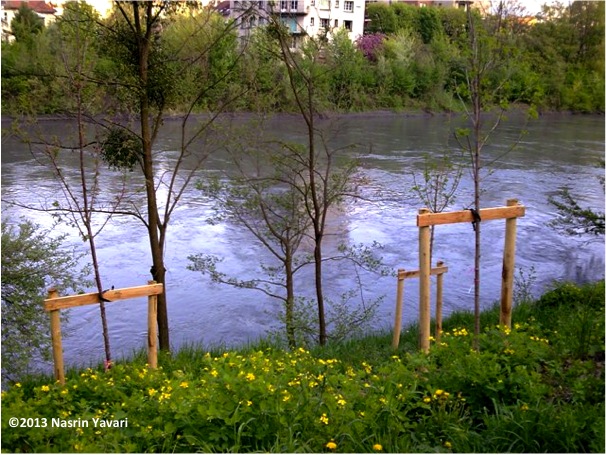 The presence of trees reduces stress in any human habitat and plays an important role in various aspects of human life:
•filter air, water and sunlight •provide shelter to animals •provide recreational area •moderate local climate, slowing wind and storm-water, and •shading homes and businesses and conserve energy Preserving the forest trees is of great importance to life and health of our planet and all human societies. Life in the urban condition has urged the need to plant more trees and create urban forests! Planting urban trees is carried out in many different parts of the world. The type of tree planted may have great influence on the environmental outcomes. To promote the growth of native ecosystems, planting fast growing indigenous trees is advocated by many environmentalists. http://en.wikipedia.org/wiki/Tree_planting http://en.wikipedia.org/wiki/Urban_tree http://www.cirrusimage.com/trees.htm |
|
Archives
July 2020
Categories
All
|
 RSS Feed
